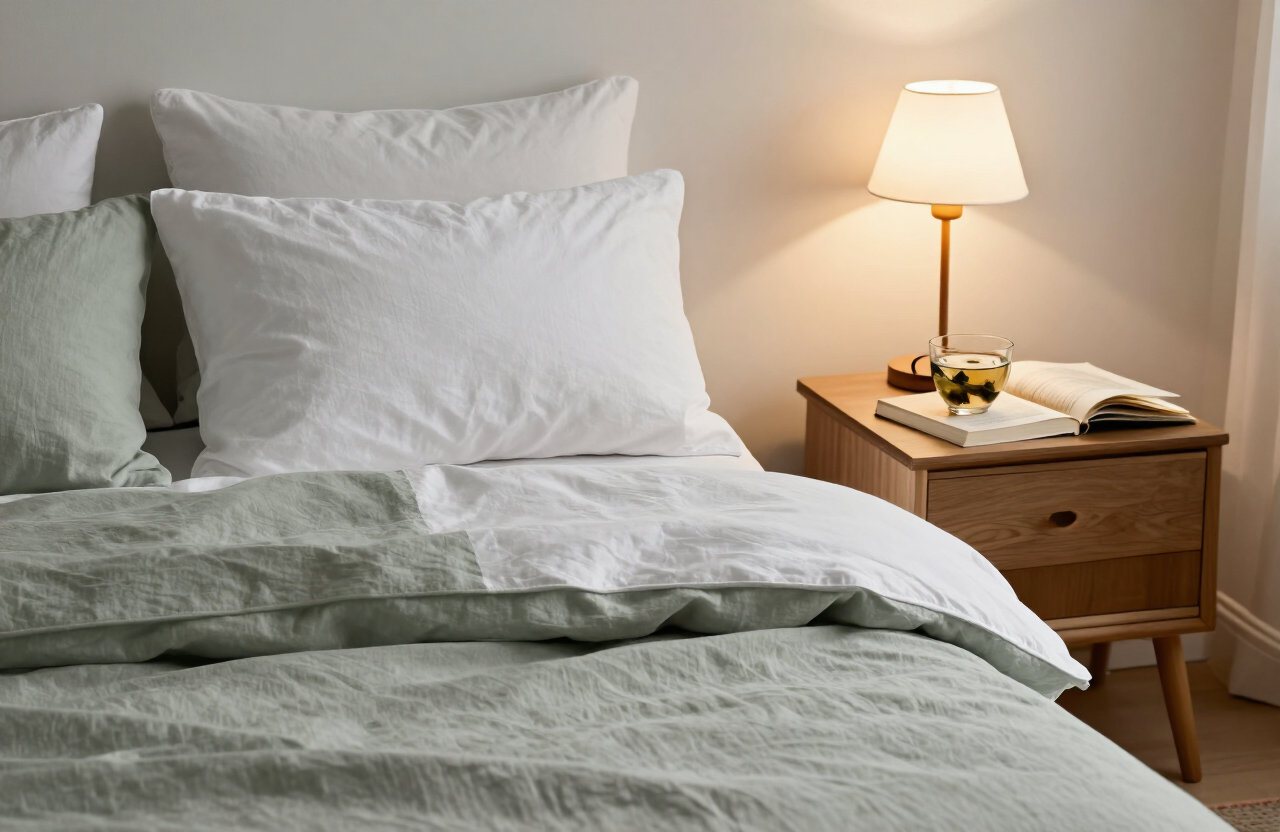
A good night’s sleep rarely begins at bedtime — it begins in the hour before. If you’ve ever climbed into bed with your mind still racing through the day’s to-do list, a simple wind-down routine can help. It doesn’t need to be long or elaborate. A few gentle cues tell your body it’s safe to let go, and over time they make falling asleep feel easier and more natural.
- Start your wind-down 30 to 60 minutes before bed with a clear cue.
- Dim the lights and step away from screens to support your body’s natural rhythm.
- Choose one calming activity — reading, stretching, or slow breathing.
- Keep the routine consistent so your body learns when it’s time to rest.
Set a cue to begin
Your wind-down needs a clear starting point. Pick a time — say, 45 minutes before you want to sleep — and pair it with a simple action, like turning off overhead lights or making a cup of herbal tea. The cue matters more than what follows it; it’s the signal that the day is winding down.
Over time, your body starts to recognise the cue and respond, making the transition into sleep feel less like a switch you have to flip and more like a gentle slope.
Dim the lights and unplug
Bright light, especially the blue light from phones and laptops, can keep your mind alert well into the evening. Dimming the lights and stepping away from screens for the last 30 minutes gives your body the space it needs to settle.
If a full screen break isn’t realistic, try small steps: switch your phone to night mode, put it face down, or keep it out of arm’s reach. Even a partial break helps more than none at all.
Choose one calming activity
You don’t need a long list — just one thing that helps you slow down. Reading a few pages of a book, some gentle stretching, or a few minutes of slow breathing all work. The activity itself matters less than doing it consistently.
If your mind keeps racing, try a short brain-dump: jot down whatever’s on your mind so it’s out of your head and on paper, where it can wait until tomorrow.
A calmer bedtime starts with a simple cue, a little less light, and one activity that helps you slow down. Keep it consistent, keep it short, and let your body learn that this part of the day belongs to rest.